
Winslow Homer Studio Tours
Tour Dates are available May 1 through November 9, 2025
Experience the New Winslow Homer Studio Tour!
All tours start at the PMA. The studio is not accessible to private vehicles
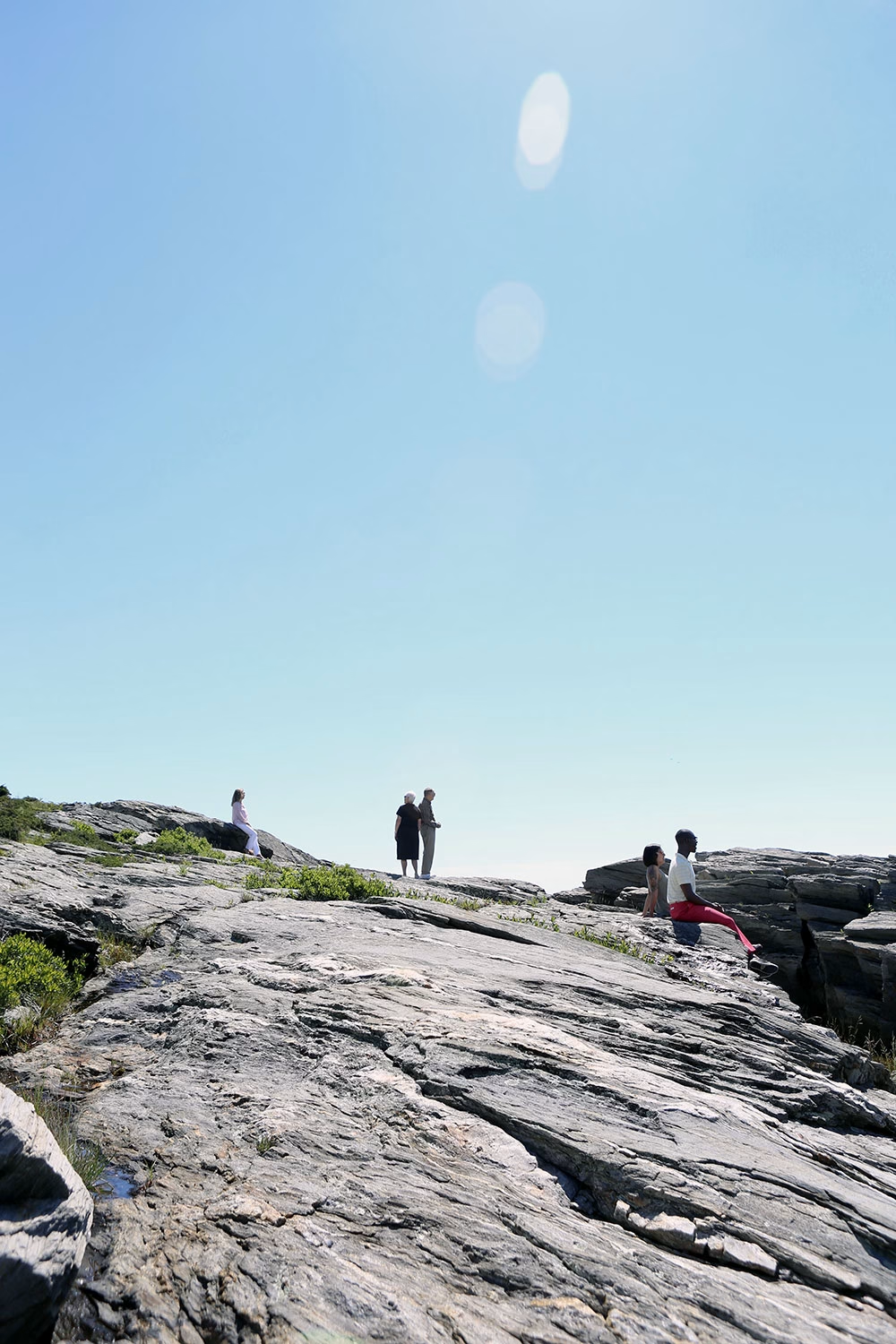
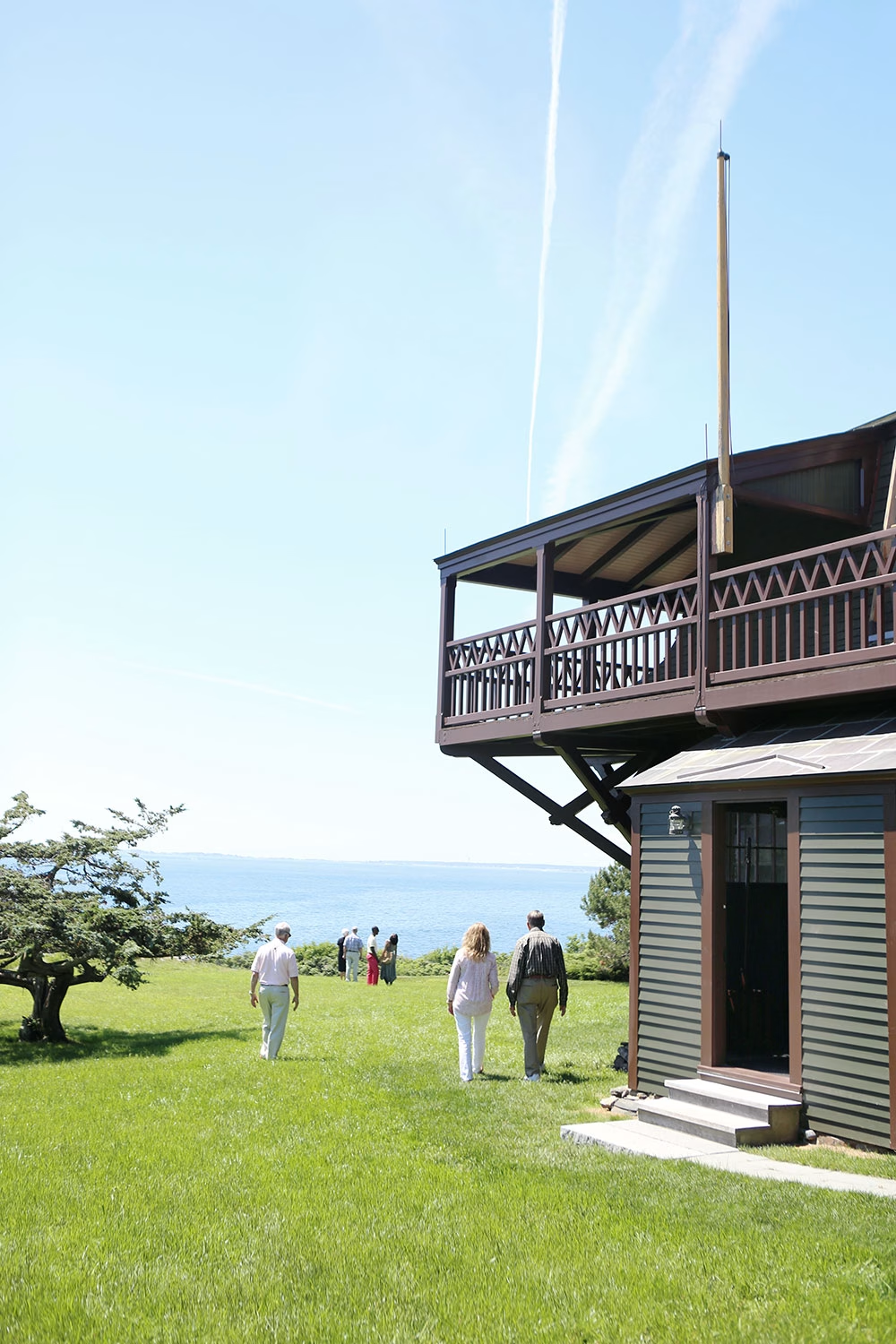
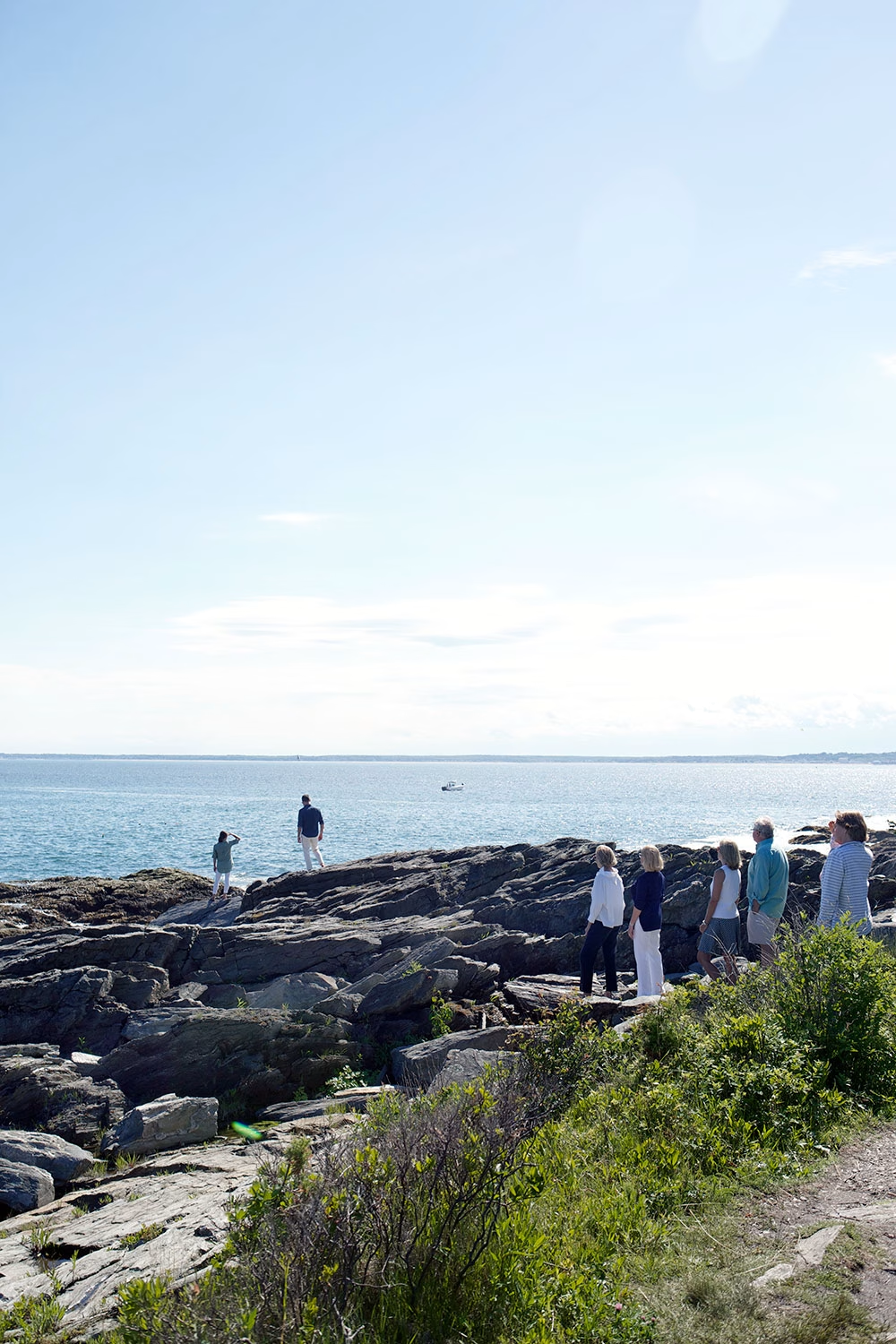
Updated with new amenities, interactive activities, and immersive experiences, audiences who tour the Winslow Homer Studio will connect more deeply with the stunning landscape of Prouts Neck and Homer’s artistic practice.

Tour FAQs
About the Winslow Homer Studio
The Winslow Homer Studio is a member of Historic Artists’ Homes and Studios, a program of the National Trust for Historic Preservation.
In 2006, the PMA purchased the property and embarked on a six-year renovation project restoring the building to how it appeared during Homer’s life and, in 2012, opened its doors to the public for the first time.
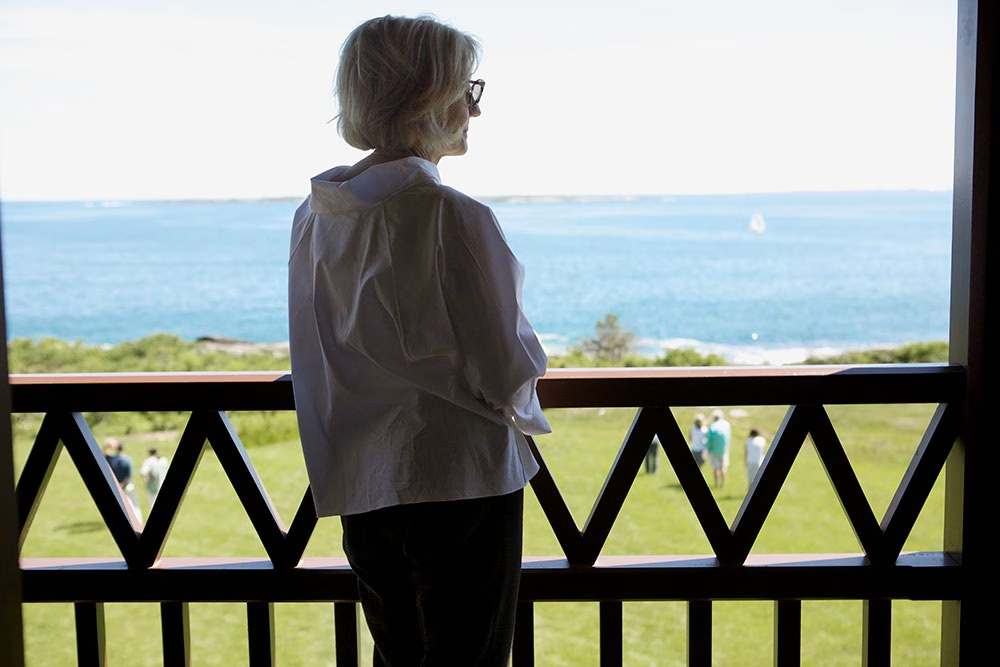
Winslow Homer Studio Tours put you uniquely in touch with Maine’s artistic heritage, allowing you to walk the floors and balconies where Homer once walked, and to be inspired by the place that inspired one of America’s greatest painters. With its combination of cultural resonance, historical significance, and natural beauty, Winslow Homer Studio Tours offer a singular experience that you will remember for years to come and want to share with others.
Take a Winslow Homer Studio Tour and discover why this location is so crucial to our understanding of Winslow Homer, American art, and indeed, Maine.







About Winslow Homer
Widely regarded as one of the greatest American artists of the 19th century, Winslow Homer (1836–1910) also has deep and deeply influential ties to Maine and the Portland Museum of Art. Indeed, the PMA is the “home” of Homer in several important regards: the museum has deep holdings of his works spanning his entire career and it operates the Winslow Homer Studio, a landmark building perched on the rocky coast of Maine in which the artist resided from 1884 until his death.

Born in Boston, Homer began his artistic career in the late 1850s with an apprenticeship in a Boston lithography shop and then as a freelance illustrator working in New York City for popular magazines, such as Harper’s Weekly . He quickly came to national attention for closely observed and perceptive images of modern American life, particularly his Civil War subjects that explore the experiences of rank-and-file soldiers in the Union army and the broader social impact of the sectional conflict.
While continuing to produce commercial illustrations until 1875, Homer increasingly concentrated his efforts on oil painting and watercolor. His paintings of contemporary life—including images of the Civil War, rural children, fashionable women, and modern leisure pursuits (such as croquet, hiking, and hunting)—as well as his loosely painted realistic style earned Homer critical acclaim as one of the nation’s most progressive and original artists.
In 1884, shortly after returning from an 18-month sojourn in the English fishing village of Cullercoats, where he painted the daily hardships of local fishermen and women, Homer moved from New York City to Prouts Neck, a small peninsula that juts out into the Atlantic about 12 miles south of Portland. Inspired by the raw beauty of the Maine coast, Homer’s art changed dramatically in theme and mood. He created monumental marine narratives and seascapes that investigate humankind’s life-and-death struggles against the sea and the elemental power of nature. Painted with vigorous brushwork and closely observed realism, these late paintings capture the titanic force of waves crashing against the rocky shore in varying seasons and climactic conditions. Homer’s Maine pictures influenced generations of artists and transformed marine painting in the United States. Highly acclaimed during his lifetime, they continue to be considered among the greatest masterpieces of American art.
The Winslow Homer Studio Tours program is supported by the Berger Collection Educational Trust and the KHR McNeely Family Foundation.

Winslow Homer Studio Reinstallation and Tours
This reinstallation is made possible by the Berger Collection Educational Trust, the Morton-Kelly Charitable Trust, and the Pinkerton Foundation in honor of George J. Gillespie III.
Individual Support:
Janice G. Hunt and Louis Matis and Anthony Calamusa
Installation materials:
Installation materials are supported in part by Lila Hunt Davies and the Roy A. Hunt Foundation.

The official outfitter of the Winslow Homer Studio Tour Experience
Media support generously provided by our creative video partner, p3.